Tried influencer marketing and got nothing? You sent out product, waited for posts, and watched sales sit perfectly still. Maybe a few creators never posted at all. Now “influencer marketing doesn’t work for us” is the line everyone on your team repeats.
Here’s the honest truth: it wasn’t the channel. It was the system. We’ve run tens of thousands of creator outreaches for eCommerce brands, and when a campaign flops, it almost always comes down to the same handful of influencer marketing mistakes. The good news? Every one of them is fixable.
Below are the seven most common reasons influencer campaigns fail, how to fix each one, and a simple checklist to run before your next launch.
Is Influencer Marketing Still Worth It for eCommerce Brands?
Yes, when it’s run properly. Your customers scroll past ads. They don’t scroll past creators they love. A recommendation from someone they already trust does what a banner ad can’t: it makes a stranger feel safe buying from a brand they’ve never heard of.
We’ve seen it work across categories, from kitchen gear to kids’ toys to personalised gifts. For Family Gifts Co., creator posts on Instagram drove more than $200,000 in gross sales, with top creators bringing in over $10,000 from a single post. So if your campaign didn’t deliver, the question isn’t “does influencer marketing work?” It’s “what went wrong with ours?”
7 Reasons Your Influencer Marketing Isn’t Working
These are the influencer marketing mistakes we see most often when founders come to us after a campaign that went nowhere.
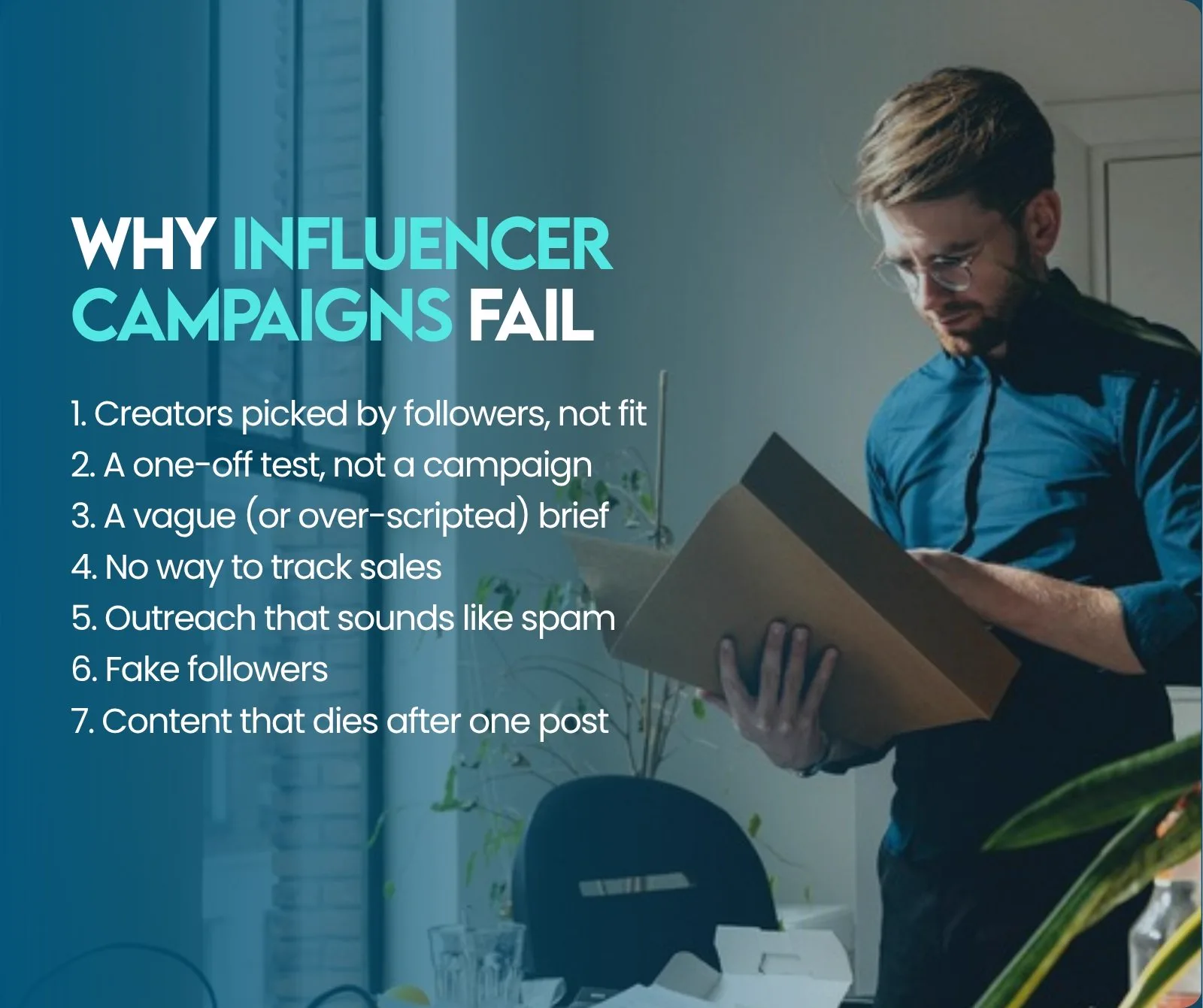
1. You Picked Creators by Follower Count, Not Fit
A creator with 500,000 followers looks like a sure thing. But if their audience is teenagers and you sell kitchen gear, that post is a very expensive way to reach nobody who buys.
The fix: define your ideal creator before you search. Who is your customer, what do they watch, and which creators do they already trust? Then judge every creator on audience match, engagement and content style. A nano or micro creator whose followers look exactly like your customers will often outsell a big name.
2. You Ran a One-Off Test, Not a Campaign
Five creators, one post each, then a verdict. That’s not a test. That’s a coin toss. People rarely buy the first time they see a product. They buy after they’ve seen it from several people they trust.
The fix: plan for volume and repetition. Work with enough creators to learn what works, then go back to the winners. When we ran a gifting campaign for DEPLAY, a Dutch educational toy brand, we built it around 200 creator collaborations. The result: 150% sales growth and a library of real UGC the brand still reuses. See how the DEPLAY campaign worked.
3. Your Brief Was Too Vague (or Too Scripted)
“Post something nice about our product” gets you a blurry unboxing with no reason to buy. A 3-page script gets you a stiff ad that the creator’s audience scrolls straight past. Both kill sales.
The fix: a clear brief with room to breathe. Give creators the key message, the one problem your product solves, the must-show moments, the call to action and the posting date. Then let them say it in their own voice. That’s the whole formula: (Right creators + clear brief) × trust = sales.
4. You Couldn’t Track a Single Sale
If you can’t see which creator drove which order, every campaign “fails” by default. Likes and views feel good, but they don’t tell you whether to spend another dollar.
The fix: give every creator their own discount code and tracked link (with UTM parameters), and connect them to your Shopify reports before anyone posts. Even better, add a commission. For MoreCore, a Dutch kitchen brand, each creator got a 10% discount code for their followers and a 10% commission on every sale. Creators promoted harder, every sale was tracked, and the brand grew from €150K to €1.2M in one year. Read the MoreCore story.
5. Your Outreach Sounded Like Spam
Copy-paste DMs, no follow-up, and a spreadsheet full of creators who never replied. Sound familiar? Good creators get pitched every day. A generic message is an easy “no”.
The fix: personal outreach and a real follow-up sequence. Mention their content, explain why your product fits their audience, and make the offer clear. Then follow up, politely, more than once. Most yeses come after the first message, not from it.
6. You Paid for Fake Followers
Bought followers and engagement pods make a profile look busy. They don’t buy anything. If a creator has huge numbers but comments like “Nice 🔥” from random accounts, your product is being shown to bots.
The fix: vet before you pay or ship. Check engagement rate against follower count, read the comments, look for sudden follower spikes, and ask for audience stats (location, age, gender). If the audience isn’t real or isn’t yours, walk away, whatever the follower count says. Not sure what a creator should cost? Try our free influencer rate calculator.
7. The Content Died After One Post
Most creator posts get the bulk of their views in the first few days. If that’s the only place the content lives, you’ve paid for a few days of attention.
The fix: get usage rights in the brief, then put the best creator content to work everywhere: product pages, emails, organic social, and paid ads on Meta and TikTok. Real creator content often makes your best-performing ads, so one campaign keeps paying off for months.
How Do You Fix Influencer Marketing for Good?
Notice the pattern? None of these mistakes are about the channel. They’re about running influencer marketing as a series of random posts instead of a repeatable system. That’s why every campaign we run follows the IMPACT Framework:
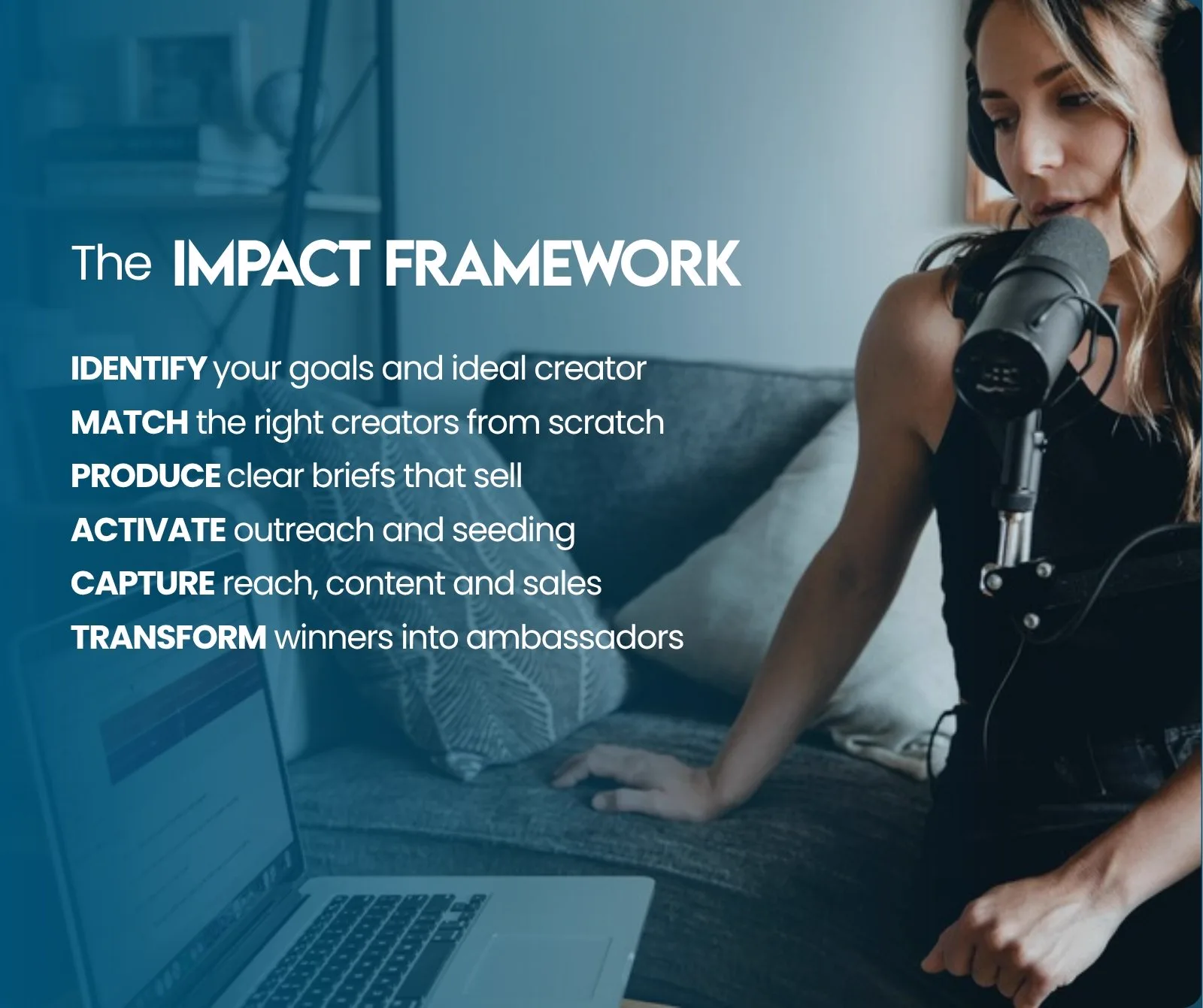
- Identify: define your goals and your ideal creator profile.
- Match: find and vet creators from scratch for your brand. No recycled rosters.
- Produce: write clear briefs so creators make content that sells.
- Activate: handle outreach, follow-ups, product seeding and posting dates.
- Capture: track reach, content and sales with codes, links and clear reports.
- Transform: double down on winning creators and turn them into affiliates and ambassadors.
Quick Checklist Before Your Next Campaign
- Do you know exactly who your ideal creator is?
- Are you working with enough creators to learn what works?
- Does every creator have a clear brief and a posting date?
- Does every creator have their own code and tracked link?
- Have you checked every creator’s audience is real?
- Do you have the rights to reuse the content in ads?
If you answered “no” to two or more, that’s probably why your last campaign stalled.
Frequently Asked Questions
How long does influencer marketing take to work?
Expect the first posts and early sales within the first month, once creators receive your product and post. Real momentum usually builds over two to three months, as you find your best creators, reuse their content in ads and turn the winners into long-term partners. A single round of posts is rarely enough to judge the channel.
How many influencers should a small brand work with?
More than most founders think. Not every creator will post on time or hit, so working with a larger group of nano and micro creators gives you enough results to see what works. Then you put more budget behind the creators who actually drive sales.
Is it better to pay influencers or send free products?
Both work, for different goals. Product seeding (sending free products) is a low-cost way to get content and find creators who genuinely love your brand. Paid collaborations give you guaranteed posts, deadlines and usage rights. Many brands start with seeding, then pay their best performers. Adding an affiliate commission rewards creators for every sale they drive.
How do I know if my influencer campaign is working?
Track three things: reach (how many real people saw it), content (how much usable creator content you got) and sales (orders from each creator’s code or link). If you can’t see sales by creator, fix your tracking before you judge the results.
Final Thoughts
If influencer marketing didn’t work for you the first time, you’re not alone, and you’re not stuck. Pick the right creators, brief them well, track every sale and reuse what works, and the channel starts paying you back.
No time to fix it yourself? Most founders don’t. You’re running ads, inventory and customer support, and influencer outreach ends up squeezed into late nights. That’s where we come in. Armful Media is an influencer marketing agency for eCommerce brands that works like your in-house influencer team, without the in-house hire. We find the right creators, run the campaign end to end, and show you every sale.
Want to start small? A product seeding campaign is a low-risk way to prove creators can deliver content and sales for your brand before you commit to more.
Let’s find out what went wrong, together. Book a free 30-minute strategy call. We’ll review your last campaign, tell you honestly what held it back, and recommend your next step.