Influencer marketing is no longer just for lifestyle brands or consumer products. In the B2B world, professionals rely heavily on trusted experts to guide purchasing decisions. With long sales cycles and multiple decision-makers, credibility is everything. This guide will walk you through what B2B influencer marketing is, why it matters, and how to build a strategy that works.
What Is B2B Influencer Marketing?
B2B influencer marketing is when a company works with trusted experts or professionals who already have the attention of its target audience. Instead of speaking only through your brand, you partner with people your buyers already listen to, such as consultants, analysts, creators, or industry specialists. The goal is to use their credibility to build trust and stronger relationships with potential customers.
Unlike B2C influencer marketing, which often relies on social media celebrities to sell products, B2B is about thought leadership. Business decision-makers look for reliable voices that teach, share insights, and help solve problems, not flashy promotions. That is why the most effective B2B influencers are usually subject matter experts, even if they do not have huge followings.
Why Should Businesses Use Influencer Marketing in B2B?
Businesses should consider influencer marketing in B2B because it strengthens credibility and speeds up trust-building with potential buyers. In industries where decisions are complex and involve multiple stakeholders, having respected voices on your side can make a big difference.
Key benefits include:
- Building authority by associating with known experts.
- Reaching new and highly relevant audiences.
- Creating engaging, trustworthy content.
- Driving more qualified leads that are easier to convert.
When done correctly, influencer marketing helps a brand stand out in crowded markets where traditional ads often fall flat.
How to Build a Strong B2B Influencer Marketing Strategy
Building an effective program takes more than just finding people with big followings. It requires clear goals, the right partners, and a focus on long-term relationships.
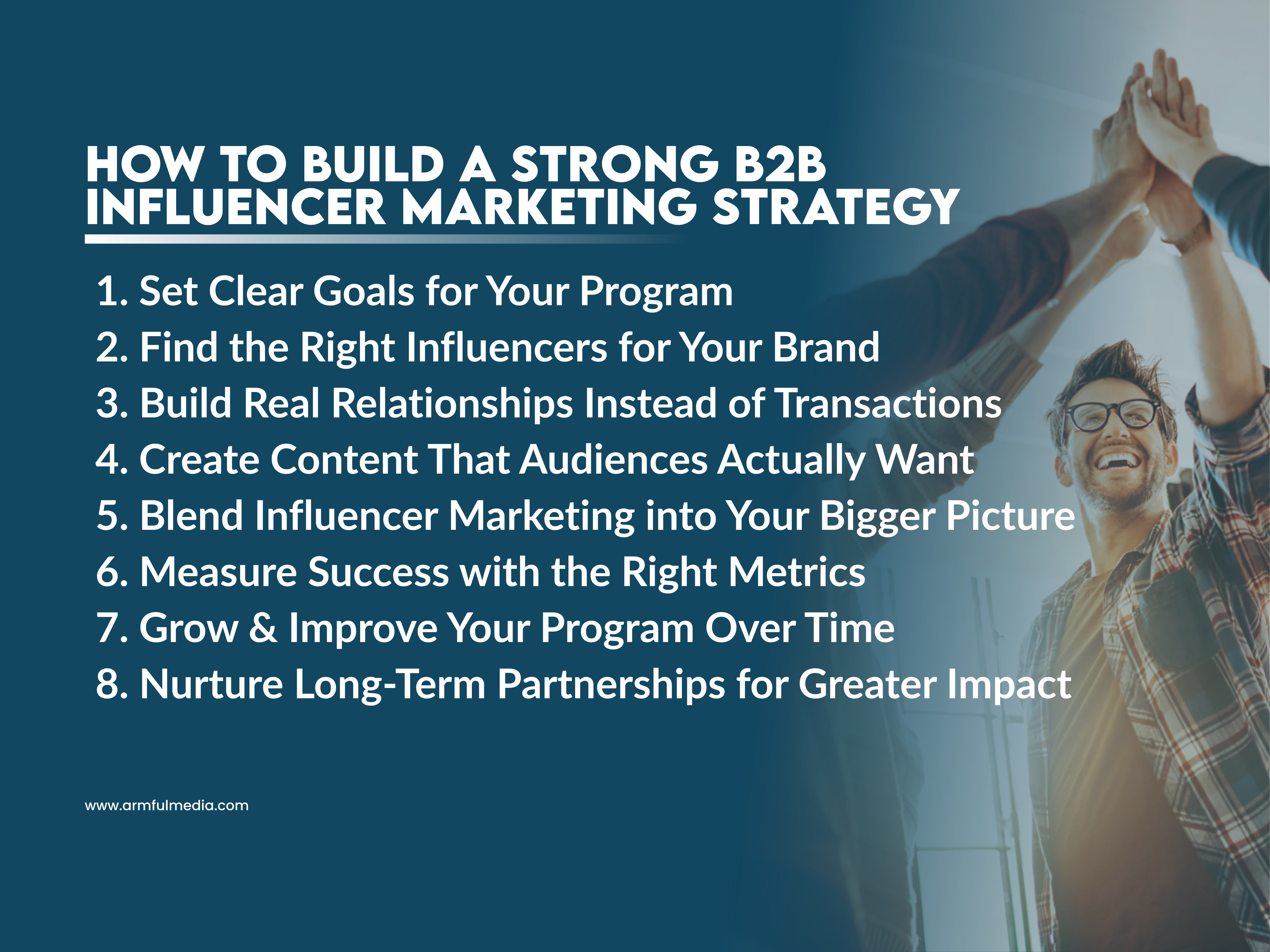
1. Set Clear Goals for Your Program
Every successful strategy starts with knowing what you want to achieve. Some businesses want to increase brand awareness, while others aim for leads or stronger thought leadership. Defining goals helps you pick the right influencers and measure the right outcomes. Make goals specific, such as “grow webinar registrations by 30 percent” instead of vague targets like “get more attention.”
2. Find the Right Influencers for Your Brand
Not every well-known person online will be a good fit. The right influencer is someone your audience already trusts and pays attention to. Focus on relevance, credibility, and meaningful engagement rather than follower counts. The most valuable partnerships come from influencers who are genuinely connected to your industry and care about the challenges your audience faces.
3. Build Real Relationships Instead of Transactions
Approaching influencers with only a one-off paid offer rarely works in B2B. Building long-term partnerships creates stronger results. Start by engaging with their content, sharing their work, and adding value before asking for collaboration. Influencers are more likely to support brands that respect their expertise and share common goals.
4. Create Content That Audiences Actually Want
The most effective B2B influencer campaigns focus on education and problem-solving. Co-create content that feels useful to your audience, not like a sales pitch. Strong formats include webinars, podcasts, research reports, video interviews, and industry guides. Repurpose the content across channels so it reaches as many decision-makers as possible.
5. Blend Influencer Marketing into Your Bigger Picture
Influencer content should not live in isolation. Blend it into your blog, email campaigns, ads, events, and account-based marketing strategies. For example, you can invite influencers to speak at virtual events or feature their insights in case studies. This approach makes influencer work a natural extension of your wider marketing program.
6. Measure Success with the Right Metrics
Tracking performance is critical to prove value and improve your program. The right metrics depend on your goals. For awareness, look at impressions and reach. For engagement, track sign-ups, downloads, and content interactions. For lead generation and sales, connect influencer efforts to pipeline influence and revenue using CRM tracking and UTM codes.
7. Grow & Improve Your Program Over Time
Start small with a few influencers and expand once you see results. Over time, you can turn partnerships into long-term ambassador programs. Consider building a community of micro-influencers who bring authentic voices from different parts of your industry. Use technology and AI tools to scale while keeping a human touch in your relationships.
8. Nurture Long-Term Partnerships for Greater Impact
The best results in B2B influencer marketing come from ongoing partnerships, not one-off campaigns. When you invest in nurturing long-term relationships, influencers become genuine advocates who deeply understand your brand. This creates more authentic content and stronger trust with your audience. Over time, consistent collaboration builds a community of supporters that strengthens your market presence.
Common Mistakes to Watch Out For
It’s easy to make missteps when setting up a B2B influencer program. Many companies rush into partnerships without a clear plan and end up wasting resources.
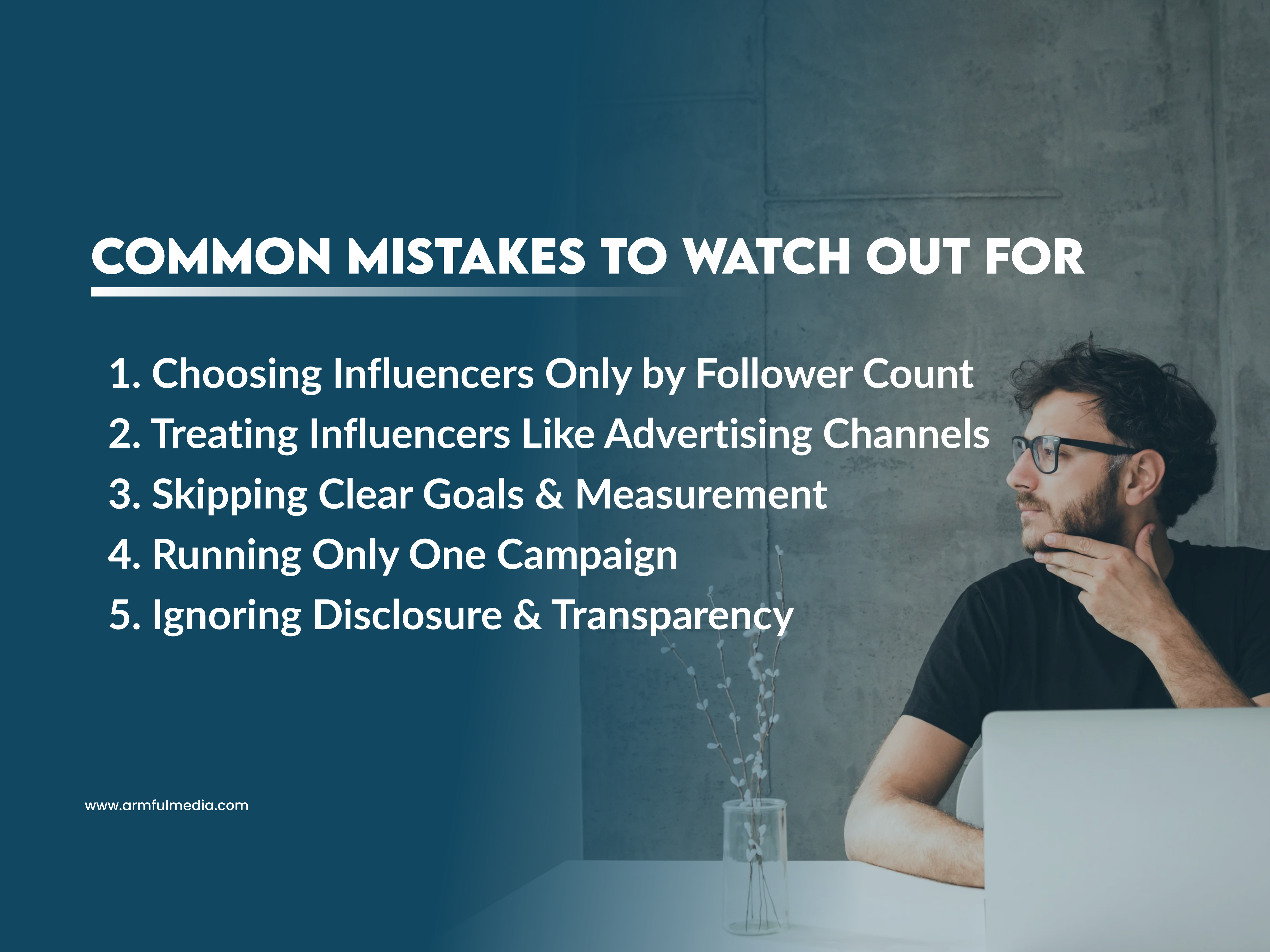
1. Choosing Influencers Only by Follower Count
Choosing influencers only because they have large audiences often leads to poor results since follower count does not equal trust or influence. Instead, focus on relevance and credibility. Quality engagement matters more than numbers. A smaller but more engaged audience is usually more valuable in B2B.
2. Treating Influencers Like Advertising Channels
In B2B, people want authentic advice, not scripted endorsements. If you treat influencers like ad space, their audience will lose trust. Strong partnerships are built on collaboration and mutual respect. This approach creates better content and stronger long-term outcomes.
3. Skipping Clear Goals & Measurement
Without clear targets, you will not know if your program is working. This wastes resources and lowers impact. Always connect influencer work to measurable business outcomes. Goals and metrics provide a roadmap for improvement.
4. Running Only One Campaign
Influencer marketing takes time to build momentum. One-off projects rarely deliver strong ROI. Ongoing partnerships create stronger results and longer-term impact. Treat influencer marketing as a program, not a one-time project.
5. Ignoring Disclosure & Transparency
Failing to be open about paid partnerships can damage credibility. Always follow regulations and make sure the audience knows when a partnership exists. Transparency builds trust for both the influencer and the brand. Openness keeps both parties credible in the long run.
Note: Avoiding these mistakes will save time, money, and brand reputation. Building trust requires patience, and strong partnerships pay off in the long run.
What’s Next for B2B Influencer Marketing
The landscape of B2B influencer marketing is evolving quickly. As buyers become more skeptical of traditional advertising, trusted voices will play an even bigger role. Companies that invest in real relationships will have a competitive edge.
Emerging trends include:
- The rise of micro and nano influencers with niche expertise.
- AI helping brands find the right influencers and measure performance.
- Employees becoming in-house influencers for their own companies.
- Increased demand for transparency and compliance in influencer partnerships.
The future of B2B influencer marketing is about collaboration, authenticity, and long-term value. Businesses that adapt early will benefit the most.
Final Thoughts
B2B influencer marketing is one of the most effective ways to earn trust and credibility in a crowded marketplace. By working with experts who already have strong relationships with your target audience, you can create content that resonates and drives real business results. The key is to approach it as a partnership, not just a transaction.
If you want to succeed, start by setting clear goals and building genuine relationships with the right influencers. Focus on creating educational content, integrate efforts across your marketing strategy, and measure success carefully. Over time, these efforts will not only generate leads but also strengthen your brand’s authority and reputation.
Work with the right experts to build trust and grow your brand through influencer marketing. Our team helps you find the right voices and create content that connects with your audience. Book a discovery call today to start building your B2B influencer strategy.

The Armful Media Content Team is a group of skilled writers, researchers, and strategists passionate about influencer marketing. We create content that drives real results, engages audiences, and builds trust, helping brands expand their reach and connect with their audience in meaningful ways.