Influencer partnerships work best when they are planned and cared for over time. An influencer relationship management program helps brands keep track of people, deals, and results. This post explains what an IRM program looks like, why it matters, and how to run one well. You will get clear steps, smart tips, and reliable tool choices to start today.
What Is an Influencer Relationship Management Program?
An influencer relationship management program is a system brands use to find, work with, and support creators. It covers outreach, contracts, content planning, and how a brand measures success. The goal is to turn one-time posts into ongoing partnerships that feel real to the audience. Industry guides describe IRM as the ongoing process of building and improving creator partnerships.
IRM borrows ideas from customer relationship management but focuses on creators and their audiences. It uses simple records, shared calendars, and regular check-ins to keep work smooth. Good IRM keeps payment terms clear and makes it easy to reuse content across channels. When brands treat creators as partners, both sides plan better content and measure real impact.
Why Do Brands Need an IRM Program?
One-off posts fade fast, but long-term creator partnerships build lasting impact. An IRM program builds trust as audiences see a brand connected to a voice they already know. It saves time through a clear process for outreach, approvals, and repeat work. Brands that commit to this model gain consistent results and deeper impact.
An IRM program also raises return on investment over months, not days. Creators who share repeatedly drive more clicks, purchases, and loyalty. It keeps the brand voice steady since the same trusted partners carry messages across campaigns. With a solid system, scaling to more creators feels smooth instead of chaotic.
Core Components of an Effective IRM Program
A useful IRM program has a few steady parts that repeat every campaign. You need ways to find creators, bring them on board, plan content, track results, and stay in touch. Each part should be simple and written down so that anyone on the team can follow it. The framework below breaks those parts into clear actions you can copy.
- Discovery & Vetting: Find creators who match your audience and values. Look at where they post and who follows them. Check engagement to see if comments feel real. Save these notes to a simple list you can share.
- Onboarding & Agreements: Set clear goals, deliverables, and payment terms from the start. Use a short written agreement or a clear message thread. Explain brand guidelines but allow creator voice. Make next steps and deadlines obvious.
- Collaboration Workflow: Agree on content ideas and a calendar before work starts. Use a shared doc or a simple project board to record who does what. Keep a single place for drafts and approvals. This reduces back and forth and speeds delivery.
- Performance Tracking: Decide which metrics matter before the campaign begins. Track views, likes, clicks, and sales where possible. Use simple weekly notes to spot what works. Compare creators and learn which formats drive action.
- Relationship Nurturing: After a campaign, thank creators and share performance notes. Send small gifts or early access to new products when the fit is good. Invite top creators to special projects or events. These gestures help creators feel part of the brand.
Together, these parts keep work from becoming one-off and chaotic. They let teams move fast without losing control of the brand. Follow a short checklist for each creator, and you will save time. Over months, you will build stronger messages and better results.
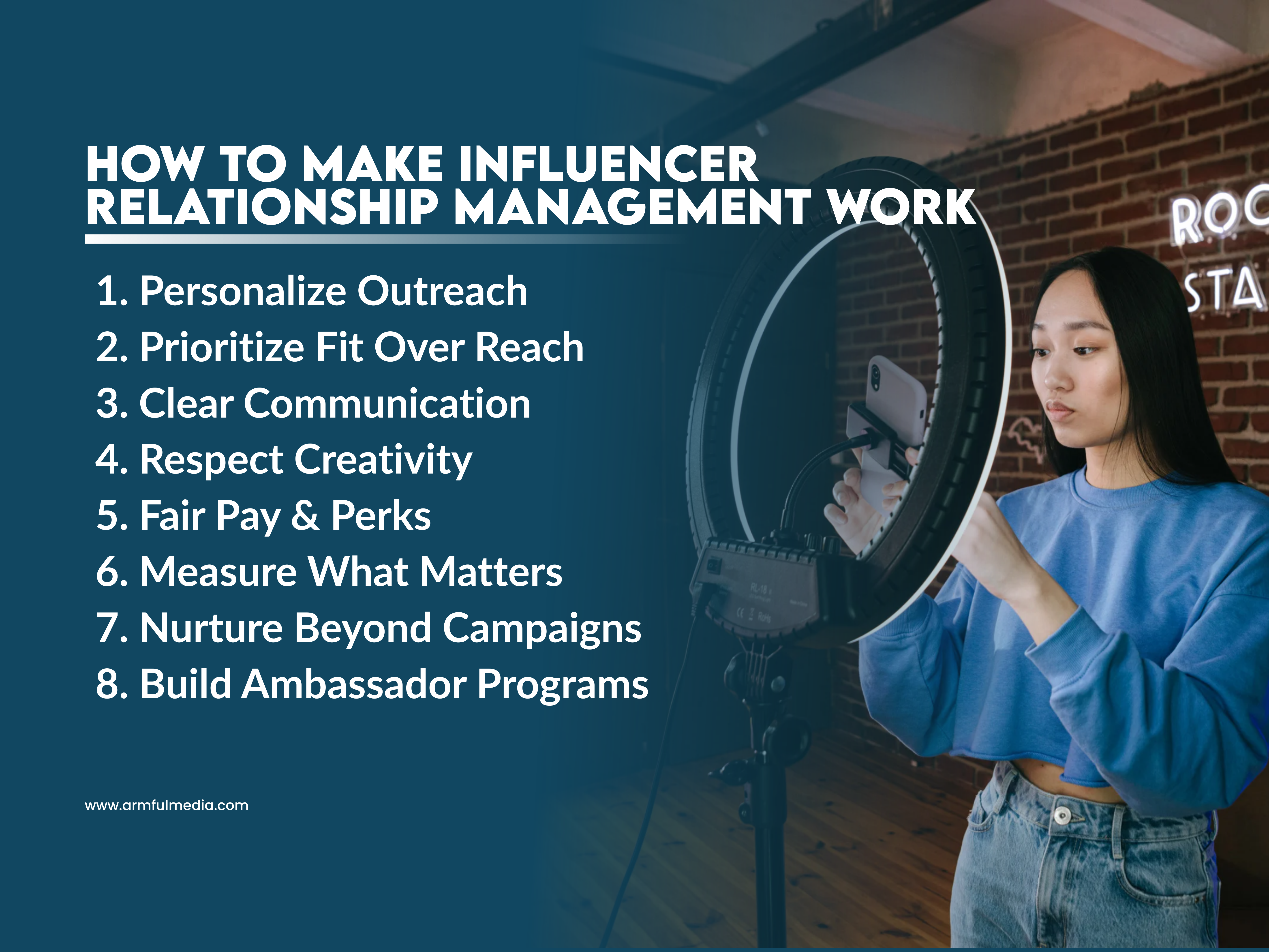
How to Make Influencer Relationship Management Work
Brands see the best results when they treat creators as partners, not one-off vendors. A smart IRM approach turns simple campaigns into lasting collaborations that deliver real growth.
1. Personalize Outreach
Start each contact with a note that proves you know the creator’s style and work. Point out a recent post you liked and explain why it connects with your brand. Keep the first message short, clear, and focused on one shared idea. This makes replies more likely and sets a tone of real respect.
2. Prioritize Fit Over Reach
A smaller but loyal audience can deliver more impact than a large group that does not engage. Look closely at shared values, tone, and overlap with your target customers. Micro and nano creators often cost less and bring stronger trust. Reach is useful, but it should never be the only factor you weigh.
3. Clear Communication
Give creators a simple brief that explains one main goal and all key details. Always state deadlines, hashtags, and required disclaimers before work begins. Stay open to questions and reply quickly so projects keep moving forward. Clear notes cut down on revisions and show that you respect their time.
4. Respect Creativity
Allow creators to share your message in their own words and voice. They know their followers best and can shape the story in ways that feel natural. Offer guidelines for tone and brand safety, but avoid strict word-for-word scripts. Trust leads to authentic content that performs better with audiences.
5. Fair Pay & Perks
Pay each creator a fair rate and make sure payments arrive on time. Use a mix of fees, free products, or performance bonuses when it makes sense. Spell out payment terms early so there is no space for confusion or delay. Clear and timely rewards build trust and support repeat partnerships.
6. Measure What Matters
Pick success metrics that match your true goal, such as traffic, sign-ups, or sales. Do not focus only on likes or views if they do not tie to business results. Use tracked links, promo codes, or custom landing pages to prove impact. Share reports with creators and plan next steps together as partners.
7. Nurture Beyond Campaigns
Keep a simple record of top creators and reach out even when no campaign is live. Send small updates, product samples, or friendly notes to show you care. Invite trusted partners to test early ideas before a full launch. These small gestures build stronger ties and make long-term work easier.
8. Build Ambassador Programs
Turn your best creators into brand ambassadors who enjoy lasting perks. Give them early access to launches, higher pay rates, or special codes to share. Ambassadors can work side by side with product teams or content staff. This deeper bond creates steady content and loyalty on both sides.
Common Mistakes to Avoid in an IRM Program
Common mistakes can undo the best plans when teams rush or skip basics. Watch for a few traps that keep programs short-lived or costly.
- Treating Creators as Ad Slots: Do not hand down a post and expect the best work. Creators want a partnership, not a short-paid task with no context. When you ignore their voice, posts often underperform and feel fake. Instead, collaborate and explain why the post matters.
- Chasing Vanity Metrics: Follower counts and likes are easy to see but often misleading. Focus on actions that move your business like clicks, sign-ups, or sales. Use promo codes and tracking links to connect activity to outcomes. This helps you pay for impact, not surface numbers.
- Micromanaging Creative Work: Telling creators exactly what to say hurts authenticity. It also stifles ideas that could outperform a brand script. Offer clear brand rules and then trust the creator to deliver. A good brief plus creative freedom gives the best results.
- Overlooking Micro Creators: Small creators can have stronger bonds with their audience. They are often cheaper and more willing to try new ideas. Mixing micro creators into your program gives steady test signals. Do not dismiss them because of follower count alone.
- Failing to Follow Up: After a campaign, teams often move on without feedback. This leaves creators unsure if they did well and stops future work. Share results, thank them, and offer next steps if the work was strong. A quick follow-up turns one-time wins into repeat partnerships.
Conclusion
An IRM program turns one-off posts into real partnerships that build trust. It asks for small process work up front and pays back with better content and clearer results. Use the core components and tips above to start a practical program you can run each month. Keep the program simple at first and add complexity only when it helps.
Track the right metrics, pay creators fairly, and protect the brand with basic vetting. Over time, these habits create a roster of creators who know your brand and your customers. That roster becomes a reliable way to launch products and tell your message. If you want, I can expand this into a ready-to-publish blog post with examples, templates, and a short creator outreach script.
Managing influencers can feel chaotic without a clear system. We help brands turn that chaos into a structured IRM program that saves time and improves ROI. Book a discovery call today to see how our team can support your success.

The Armful Media Content Team is a group of skilled writers, researchers, and strategists passionate about influencer marketing. We create content that drives real results, engages audiences, and builds trust, helping brands expand their reach and connect with their audience in meaningful ways.