You’ve got a great product and a shelf of samples. You’ve probably even sent a few to influencers. Then… nothing. No post, no reply, no sales.
That’s the most common way product seeding goes wrong. It’s not because seeding doesn’t work. It’s because most brands treat it like a lottery ticket instead of a system.
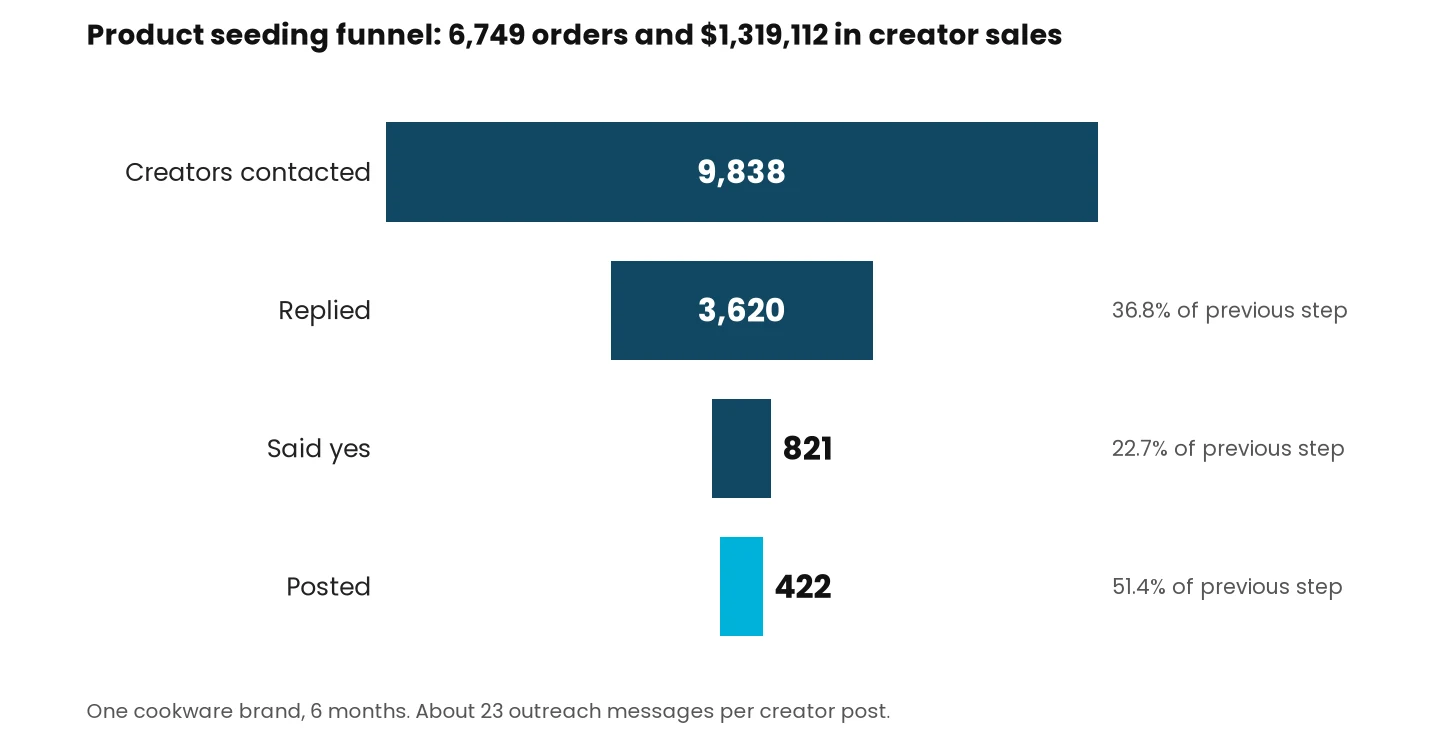
We run product seeding for eCommerce brands every week. In this guide we’ll show you exactly how it works, step by step, with the real numbers from our campaigns, including the one that turned free frying pans into $1,319,112 in tracked creator sales in 6 months.
What is product seeding?
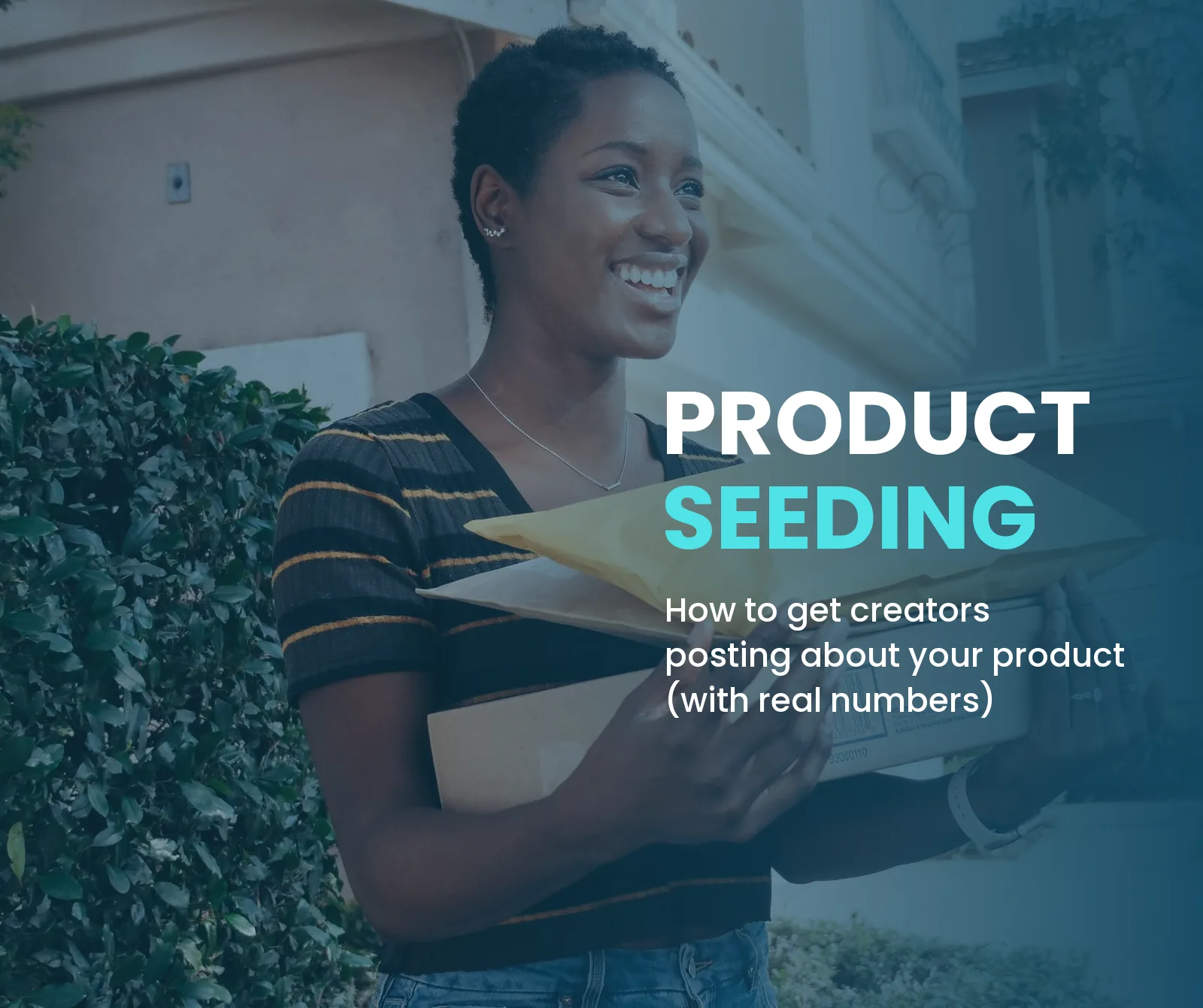
Product seeding means sending your product for free to creators who fit your brand, so they try it and share it with their audience.
There’s usually no upfront fee. Instead of paying a creator $500 for a post, you send a product. If they love it, they post. If you add an affiliate link or discount code, they can earn commission on every sale they drive, and you only pay when it works.
Done right, product seeding gives you three things at once:
- Trust. A real person showing your product in their real kitchen, bathroom or garage beats any ad.
- Content. A steady flow of creator videos you can reuse in ads, on your product pages and on social.
- Sales. Trackable revenue through creator links and codes.
Product seeding vs. paid influencer posts
| Product seeding | Paid influencer posts | |
|---|---|---|
| Upfront cost | Product + shipping | Product + a fee per post |
| Who you work with | Many smaller creators (nano to mid-tier) | A few bigger creators |
| Content feel | Natural, unscripted | More polished, more “ad-like” |
| Guaranteed post? | No. You’ll get some misses | Usually, by contract |
| Best for | Building a steady content and sales engine | A launch moment or quick reach |
Seeding is a volume game with a low cost per try. Paid posts are a few big bets. Most growing brands should start with seeding, then pay to boost the creators who prove they can sell.
Does product seeding actually work? Here are our real numbers
Most guides stop at “send products to influencers.” Here’s what it looks like in practice, from two real campaigns we ran, tracked from first message to final sale.
| Cookware brand | Earplug brand | |
|---|---|---|
| Product | Titanium frying pans (~$195/order) | Filter earplugs (~€25) |
| Market | US, AU, CA, NZ | Europe |
| Period | 6 months | 12 months |
| Creators contacted | 9,838 | 24,777 |
| Reply rate | 36.8% | 24.2% |
| Creators who said yes | 821 | 854 |
| Creator posts | 422 | 548 |
| Orders from creators | 6,749 | 1,209 |
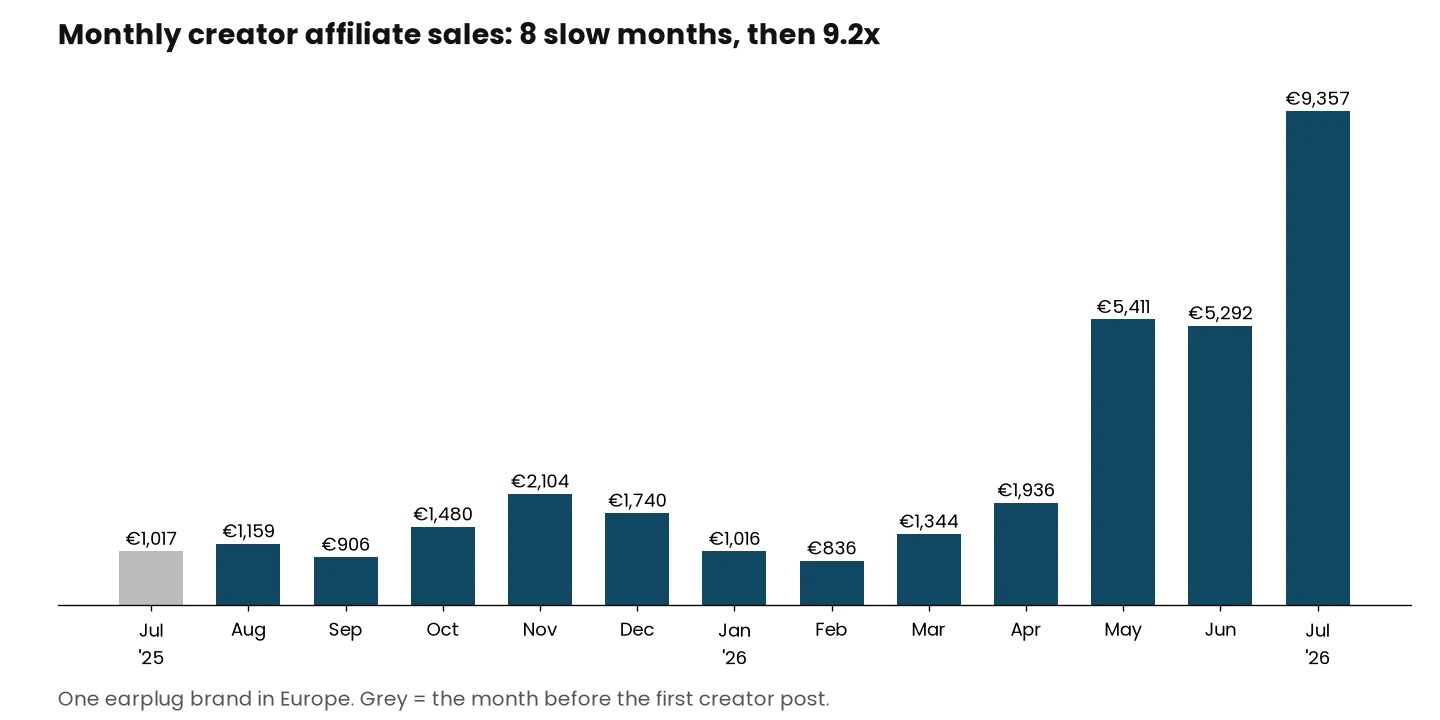
| Creator sales | $1,319,112 | €32,581 (monthly sales up 9.2x) |
Want the full story? Read the cookware and earplug case studies.
Three things jump out:
- It’s a numbers game. For the cookware brand, it took about 12 outreach messages to get one creator to say yes, and about 23 to get one post. That’s normal. If you contacted 20 creators and nobody posted, you didn’t fail. You just haven’t started yet.
- Expensive products can work too. Many guides say seeding only suits cheap products. The cookware brand’s pans cost around $195 an order, and seeding still became a seven-figure sales channel.
- It takes patience. The earplug brand’s affiliate sales moved sideways for eight months before taking off. The cookware brand went nine weeks before the first creator post went live. Most brands quit right before it starts working.
How to run a product seeding campaign: 7 steps
Step 1: Define who your ideal creator is (before you search)
Write it down. Who is your buyer, and who do they already trust?
For a cookware brand we work with, the answer was “creators who genuinely cook and make clean, educational food content,” not “food influencers.” For an earplug brand, it was motorcyclists, because their first winning creator was a rider. Start from what has already worked for you, even if it’s just one great post.
Also decide who you don’t want. We passed on any cooking creator already promoting two or more competing cookware brands.
Step 2: Find creators from scratch, and check engagement, not follower count
Don’t just reuse a list of “influencers in your niche.” Search for creators whose content and audience match your product, then check:
- Engagement: do real people comment, ask questions and tag friends?
- Consistency: do they post at least weekly?
- Fit: would your product look natural in their content?
A creator with 8,000 engaged followers who buys products like yours will usually sell more than one with 200,000 passive ones.
Step 3: Write outreach that gets replies
Most seeding fails here. Keep the first message short and about them:
- Say why you picked them (a specific video or detail).
- Say what you’d like to send, in one line.
- Make it easy to say yes: “Want me to send one over?”
Don’t paste a contract into the first message. Our replies across campaigns ran between 24% and 37%, and most of that comes from being specific and human.
Step 4: Send the product, plus a reason to keep posting
A free product gets you one post, maybe. A free product plus an affiliate link and a discount code for their followers gives creators a reason to keep talking about you.
That’s how we set up both the cookware and earplug campaigns: every creator who said yes got the product, a discount code and an affiliate link. The earplug brand’s creators started at 15% commission.
Tip: ask for an ad code too (on TikTok it’s called a Spark Ads code; on Instagram it’s partnership ads permission). It lets you run the creator’s post as a paid ad. For the cookware brand, 206 creators gave one, and the two posts that became its biggest sellers were both run as ads with the creator’s code. Together they drove 61.4% of all tracked creator sales.
Step 5: Give creative freedom, not a script
This was the biggest change for the cookware brand. Before working with us, they kept tight control over what creators made, and the content didn’t feel natural.
Instead, send a short brief: a few content ideas, one open option and some basic guidelines (what to show, what to avoid, the key message). Creators know what works for their audience. Your job is to make sure the product’s main benefit comes through.
Step 6: Follow up, and keep your creators active
People get busy. A friendly check-in a week or two after delivery lifts post rates a lot. The earplug campaign reached a 70.2% post rate among creators who received their earplugs.
For long-term programs, give creators a community. We set up a WhatsApp group for the earplug brand’s affiliates (199 joined) to share news, ideas and extra commission offers. Posting didn’t stop after the first video.
Step 7: Track sales, then double down on what sells
Use a tool that tracks creator links and codes, such as Shopify Collabs, GoAffPro, UpPromote or TikTok Shop’s affiliate center. Then look at the data every month:
- Which creators actually sell? Send them more product and more attention.
- Which formats sell? Share the winners as examples with your other creators.
- Which posts should become ads?
For a family wipes brand on TikTok Shop, the first month showed only 1 of 81 active affiliates had made a sale. So we stopped chasing more creators and focused on the ones who could convert: we made the TikTok Shop product tag mandatory, rewrote the brief around real demos and clear calls to action, and leaned into creators who went LIVE. By September, the shop’s GMV was 13.8x what it was in June (read the wipes case study).
Product seeding mistakes to avoid
- Sending without asking first. Unrequested packages rarely turn into posts. Get a yes before you ship.
- Picking creators by follower count. Engagement and fit matter far more.
- No tracking. If there’s no link or code, you can’t tell what’s working.
- Scripting everything. Over-controlled content looks like an ad, and people scroll past ads.
- Giving up after 20 creators. Seeding is a volume game. Plan for hundreds of conversations, not dozens.
- Treating it as a one-off. The brands that win run seeding every month and keep their best creators close.
How much does product seeding cost?
Your direct costs are the product, shipping and any affiliate commission (which you only pay on sales). The hidden cost is time. Finding, vetting, messaging, shipping to and following up with hundreds of creators takes many hours a week.
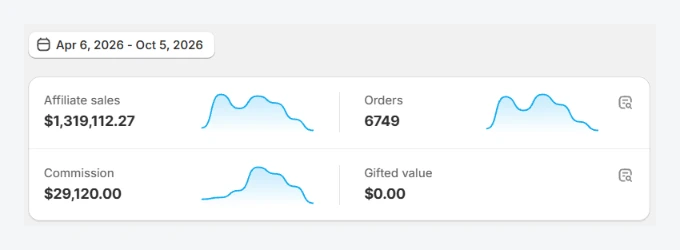
For context: the cookware brand paid $29,120 in commission on $1,319,112 in creator sales, about 2.2% of sales.
Is product seeding right for your brand?
Product seeding works best if:
- Your product shows well on camera (before/after, unboxing, a clear “aha” moment).
- You sell online and can track sales by link or code.
- You can ship samples at a reasonable cost.
- You can give it at least 3–6 months.
It’s harder if your product is very slow to show results, can’t be shipped easily, or needs heavy regulation around claims.
Want us to run it for you?
You can absolutely run product seeding yourself with the steps above. If you’d rather hand it off, that’s what our product seeding service does every day: we find creators from scratch for every brand, handle outreach, shipping and follow-up, and send you a weekly report on posts, content and sales.
Book a free 30-minute strategy call. We’ll look at your product and tell you honestly whether seeding can work for your brand, and what results to expect.
Book your free strategy call →
Product seeding FAQs
They’re mostly the same thing. “Gifting” often means sending with no strings attached. “Seeding” usually means a more planned program: picking creators carefully, agreeing first, and tracking results.
No. Seeding is not a paid contract, so some creators won’t post. That’s why it’s a volume game. With good creator selection and follow-up, we’ve seen post rates as high as 70% among creators who received the product.
More than you think. For one cookware brand we work with, roughly 23 outreach messages led to one post. If you want 20 posts a month, plan to contact several hundred creators a month.
Expect the first posts within a few weeks, and real sales momentum in 3–6 months. In our campaigns, one cookware brand had its biggest creator month in month four after kickoff, while an earplug brand took eight months to break out.
TikTok and Instagram are the strongest for most eCommerce products. YouTube works well for products that need explaining. If you sell on TikTok Shop, creator LIVE selling can be a major sales channel.